The year 2011 took a terrible toll for Japan with Sendai earthquake and its aftermath, such as the Fukushima nuclear power plant crisis. While the whole wide world were concerned about the highly dangerous radiation exposure, a specific group of Japanese people volunteered themselves to clean up the mess and facing the danger of radiation: the elderly.
Yes, according to BBC News May 31st 2011, a group of more than 200 retirees--all above the age of 60 years old--volunteered themselves to clean up the radiation from the Fukushima nuclear plant. Of course, they were not just any retirees; The Skilled Veteran Corps, as they called themselves, are made up of retired engineers and other professionals.
Why though, we let elderly people sacrifice themselves to what could be a suicidal mission? Shouldn't the younger generation who are fitter be the one who clean up the mess? The answer is because
they are older. The Skilled Veteran Corps agreed that they should replace the younger Japanese, a

nd let them rebuild Japan instead. The elderly thought that they could not let the younger generation taking the responsibilities of exposing themselves to radiation which could cause cancer. Yasuteru Yamada said that in his age of 72 year old, he would have 15 more years to live, while cancer could take 20 years to develop. Therefore, the elderly are actually less susceptible to cancer.

Yasuteru Yamada, a member of the Skilled Veteran Corps
Comment:
I think most people can agree it was very noble of the Skilled Veteran Corps to sacrifice themselves and to risk themselves of radiation exposure to spare the younger generation so they can rebuild their country. Such behavior can be easily seen as altruistic, but what interesting is that the fact the elderly had no interest of being hero. They claimed that they did it out of pure logic, not out of altruism, bravery, or even because they had the experience. So yes, they did the math; the elderly figured out they had lower chance of getting killed from cancer even if they were exposed to radiation. So I believe it is way smarter move for them to spare the younger and fitter generation to rebuild Japan. Moreover, these elderly volunteered themselves, so it was unnecessary to spend millions on labor when capable and competent workers ready to sacrifice themselves.
One aspect to look at is the fact that Japan has the highest life expectancy in the world. I think, even though these elders are made up of retired people above 60 years old, in their standard, they are still very competent and capable of doing such dangerous task. Perhaps 60 years old is not seen as very old in Japan. Lastly, I would like to say that I am impressed with the Japanese elderly. Whatever their reasons are to volunteer themselves, they put their life in danger and managed to get the job done.
 than blood relation or affiliation Nikkei identity is symbolic, historic, and political. It involves processes of interpretation and synthesis between cultures. To be a Nikkei, one does not have to live outside Japan; there are Nikkei who return to Japan although they have separate identities with natives Japanese.
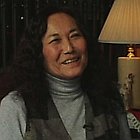 lly since they have profiles and interviews of several elderly Nikkei who was born in United States and their lives were heavily affected one way or another by the World War II. For instance, Jeanne Wakatsuki Houston (77 0r 78) was born in Inglewood, California spent her early childhood in incarceration at World War II concentration camp in Manzanar, California. She managed to get a college degree and eventually married and have 3 children. She and her husband wrote a book about what her family had gone through before, during, and after World War II, which made into a TV movie.

